
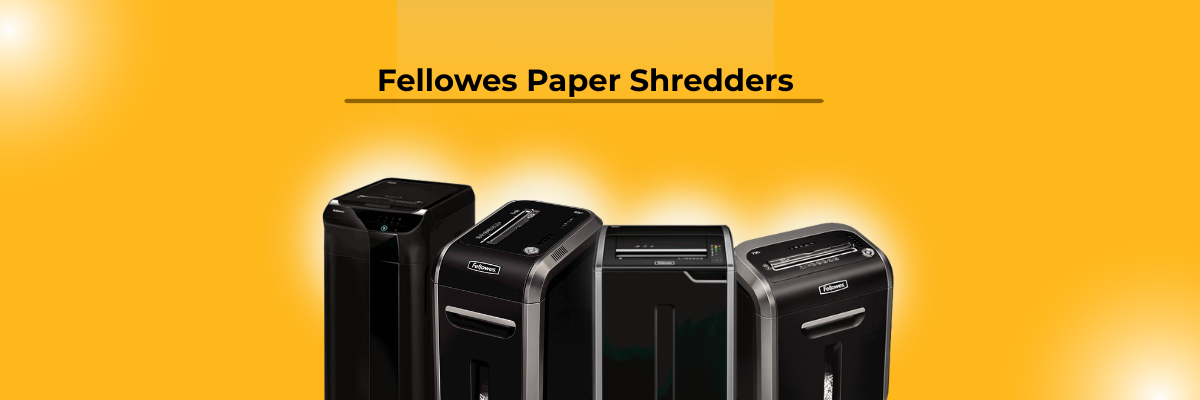
A Fellowes paper shredder should be chosen by the work it does each day, not by its sheet count alone. A three-person office, a busy shared floor, and a records department each place different demands on run time, bin size, and cut security. Matching the shredder to those demands means it keeps pace with the workload, needs less attention from staff, and protects every document at the right level.
Fellowes builds paper shredders for every office size, from compact cross-cut models to P-7 high security machines. The right choice depends on how many people shred, how much they shred, and what the documents contain. This guide explains the shredder specifications and features that matter. It covers why the right security level matters, how run time and bin size match each workload, when autofeed helps, and which model fits each office size.
What Should Buyers Check First When Choosing a Fellowes Shredder
Buyers should compare six specs before choosing a Fellowes shredder, because sheet capacity alone does not show how a machine performs across a full working day. Each spec answers a different question about speed, security, upkeep, or placement.
- Sheet capacity sets how many sheets the shredder accepts per pass, which decides how quickly a stack clears.
- Run time sets how long the motor shreds before it needs a cool-down period.
- Security level and cut type set how small each particle is and how difficult a shredded document is to reconstruct.
- Bin capacity sets how often staff need to stop and empty the shredded waste.
- Throat width sets the widest sheet the paper opening accepts, so wider documents feed straight in without folding first.
- Size and weight tell whether the shredder fits beside a desk, in a shared copy area, or in a mailroom, and how easily it moves.
A commercial paper shredder with a larger bin and wider throat stands taller and takes more floor space than a compact office shredder. Measuring the planned location before ordering keeps the chosen model from outgrowing its space.
Which Security Level Do Office and Commercial Records Require
The security level an office needs depends on how sensitive its documents are. DIN 66399 grades shredders from P-1 to P-7, and each step up produces smaller particles that are harder to piece back together.
Each security level matches a different type of record.
- P-4 suits general confidential business records, such as invoices, internal memos, contracts, and customer correspondence handled in everyday office work.
- P-5 suits highly sensitive financial, legal, and medical records, such as the employee files, client records, and financial statements handled by HR, finance, legal, and healthcare offices.
- P-7 is designed for organizations protecting highly confidential information and top-secret material, including government agencies and defense contractors that depend on high security shredders.
How Does Micro-Cut Compare With Cross-Cut in Security and Capacity
Micro-cut shredding produces far smaller particles than cross-cut, but it accepts fewer sheets per pass. The 99Ci cuts paper into 5/32 x 1 1/2 inch cross-cut particles, while the 225Mi cuts paper into 5/64 x 1 15/32 inch micro-cut particles, up to 10x smaller than standard cross-cut.
- Cross-cut at the P-4 security level suits routine confidential paperwork and clears more sheets per pass.
- Micro-cut shredders suit sensitive records that need a higher level of protection, accepting fewer sheets per pass so each page can be reduced to much finer particles.
- Within the same series, the cross-cut 225Ci accepts 22 sheets per pass, while the micro-cut 225Mi accepts 16 sheets.
The 99Ci, 550C, and 485Ci cover P-4 needs from small offices to full departments, while the 225Mi brings P-5 micro-cut shredding to shared offices.The Fellowes Powershred 425HS shreds at P-7, giving government and highly confidential offices the highest level in the standard.
When Is an Autofeed Fellowes Paper Shredder the Better Choice
A Fellowes autofeed paper shredder is the better choice when staff regularly shred full stacks and hand-feeding pulls them away from other work. The shredder draws pages from a loaded paper drawer on its own, so a user can start the cycle and return to the desk.
Compared with manual feed models, autofeed shredders add three practical advantages.
- Walk-away stack shredding removes the need to feed pages a few sheets at a time.
- A manual feed slot still handles quick jobs and single documents without loading the drawer.
- A lockable shredding cycle keeps confidential stacks secure while the machine runs unattended.
The Automax 550C accepts 550 sheets in automatic mode and 14 sheets manually. Its Smart Lock (optional 4-digit security code) keeps documents secure during the cycle.
Matching a Fellowes Office Shredder to Office Size and Daily Volume
The right Fellowes office shredder scales with the number of users and the amount of paper each office shreds daily. Run time matters at every level, since a shredder matched to how long and how often people shred keeps work moving without unplanned pauses. Each shredder category below pairs a common office setup with the specs it depends on.
Small Offices and Shared Workstations
Small offices and shared workstations need a compact shredder that fits beside a desk and suits short shredding sessions.
- A moderate sheet capacity handles daily paperwork without taking up extra space.
- A timed duty cycle (set run and rest periods), such as 30 minutes on and 40 minutes off, suits occasional shredding by a few users.
- A pull-out bin makes emptying quick in tight spaces.
The Fellowes Powershred 99Ci fits this profile with 18 sheets per pass, a 9-gallon bin, and a 25.2 inch height, which places it among compact small and home office shredders.
Busy Shared Offices Shredding Stacks or Sensitive Records
Busy shared offices need continuous run time to keep working through steady use without a scheduled cool-down, along with a larger bin. The right model then depends on what they shred most often.
- Offices clearing full stacks benefit from autofeed, which the Automax 550C provides with a 22-gallon bin.
- Offices destroying sensitive records benefit from P-5 micro-cut security, which the Powershred 225Mi provides with a 16-gallon bin.
Departments That Require a Commercial Paper Shredder
Departments need a machine built for heavy shared volume and placed in dedicated floor space, such as a mailroom or records area.
- High sheet capacity clears large stacks in fewer passes.
- Continuous run time paired with a large bin handles long batch sessions, such as file purges or year-end clean-outs.
- A wide throat accepts wider documents without folding them first.
The Powershred 485Ci is rated for departmental usage, with 30 sheets per pass, a 16 inch throat, and a 35-gallon bin. Its Auto Oil (automatic cutter lubrication system) extends shredder life, which places it among the most capable commercial shredders for departmental use.
Choosing the Right Fellowes Shredder for Long-Term Office Use
Office size and document sensitivity, along with several other workplace factors, decide which Fellowes shredder fits best. The Fellowes range covers each of these needs, so an organization can move to a larger or more secure model without switching brands as it grows. Clear run time and security ratings across the lineup make models easy to compare, which makes a Fellowes paper shredder a dependable long-term choice for buyers looking for the best paper shredder for their office.
Need Expert Guidance on Choosing a Fellowes Paper Shredder?
Shredder specialists are available to answer questions on any model in the Fellowes range. Contact the expert team, call (800) 992-5279, or email to discuss the options. The team can help match the right Fellowes shredder to the office, workload, and security requirements.


